

Kurri Kurri Lateral Pipeline & Facilities Project
Type of project: Gas infrastructure
Client: APA Group
Location: Kurri Kurri, New South Wales, Australia
Completed in: 2025
The Kurri Kurri Lateral & Storage Pipelines Project, delivered for APA Group, is one of our most technically ambitious and strategically significant infrastructure achievements in Australia.
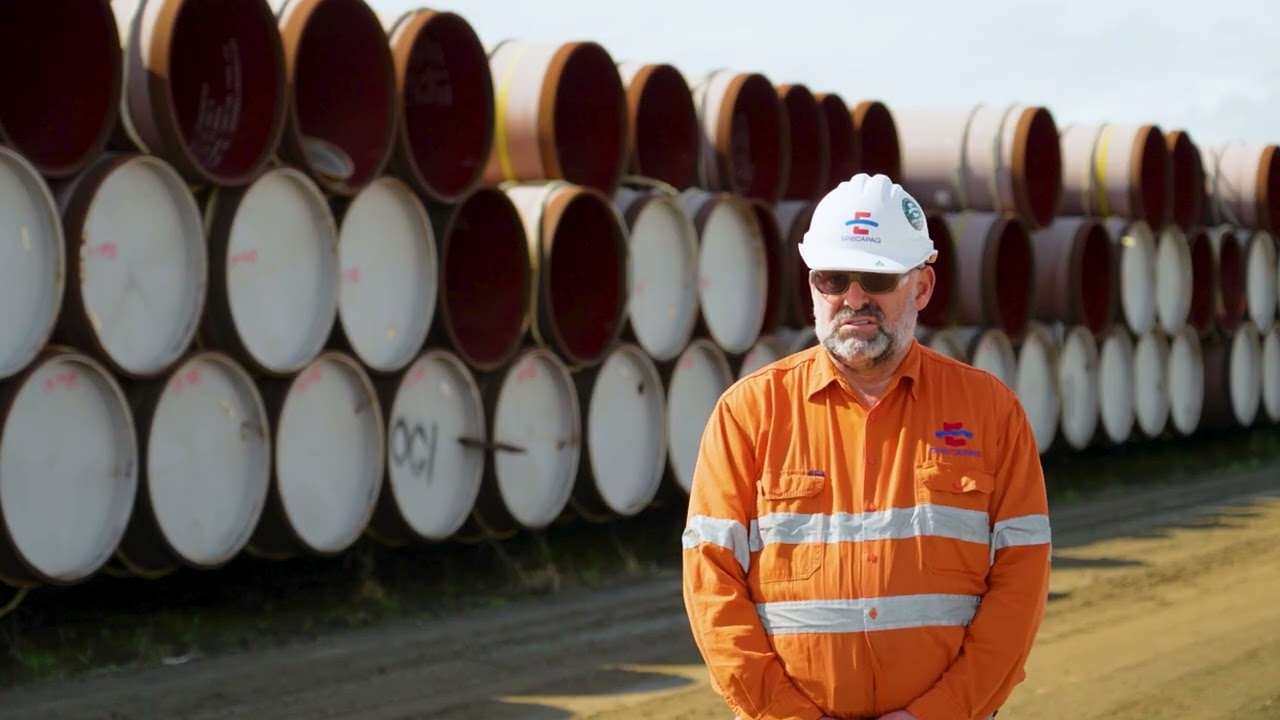
It includes a buried gas transmission pipeline and storage pipeline that will connect the proposed Hunter Power Project at Kurri Kurri, near Newcastle in New South Wales, to the existing Sydney to Newcastle pipeline. This is a complex suburban project that required seven HDDs, eight thrust bores, nine creek crossings and associated facilities works alongside conventional trenching techniques. As the main contractor, Spiecapag delivered three main components:
A 14-inch medium-pressure (up to 6.9MPa) Lateral Pipeline consisting of approximately 21 km of DN350 carbon steel pipe and one Main Line Valve assembly connecting the Jemena Gas Network offtake facility to the compressor station.
A 42-inch high-pressure (up to 15.3MPa) Storage Pipeline consisting of approximately 24 km of DN1050, carbon steel pipe located downstream of the Kurri Kurri Storage Station. The pipeline will have approximately 100 TJ of gas storage capacity and will supply the Hunter Power Station.
A 14-inch high-pressure (up to 15.3 MPa) Interconnecting Pipeline consisting of approximately 1.3km of DN350, carbon steel pipe connecting the Kurri Kurri Storage Station to the Kurri Kurri Storage Pipeline.
The standout feature of the project was the “Bottle” Gas Storage Pipeline, laid in a unique recoiled loop configuration on an L-shaped platform, a first of its kind in Australia. With a significant amount of storage capacity, this innovative infrastructure acts as both a buffer and strategic reserve, ensuring reliable energy supply. This important development will deliver fast-start gas to support firming capacity in the National Electricity Market. It will play a critical role in enabling the transition to renewables by providing on-demand energy during periods of low solar and wind generation.
From managing two parallel projects and importing specialised plant from France, to navigating tight access corridors and implementing automatic welding technology, the project team demonstrated exceptional collaboration, adaptability, and engineering excellence.