
PNG LNG
Type of project: Gas Infrastructure
Client: ExxonMobil
Location: Hides region, Southern Highlands, Papua New Guinea
Completed in: 2014
The PNG LNG Project is one of the most significant energy infrastructure developments ever undertaken in Papua New Guinea. Designed to unlock major gas and liquid hydrocarbon resources in the Hides region of the Southern Highlands, the project required the delivery of a complex onshore pipeline system through some of the most remote and challenging terrain in the world.
Over five years, Spiecapag was involved in the engineering, procurement and construction phases (EPC contract), delivering over 450 km of onshore pipelines that transport natural gas from the Hides Gas Conditioning Plant (HGCP) to the Omati River where it connects to the offshore pipeline and the condensate product from HGCP to Kutubu CPF.
Project Scope
The scope of the work included a gas main line of 266 km of DN800, 27 km of DN860, 2 km of DN300 and 10 km of DN250 of gas pipeline, as well as 109 km of DN200 condensate pipeline. In addition to the pipelines, Spiecapag delivered associated infrastructure including custody transfer metering systems at Kutubu and Gobe, helipads, fibre optic cable installation and high-voltage power cabling.
Extreme operating environment
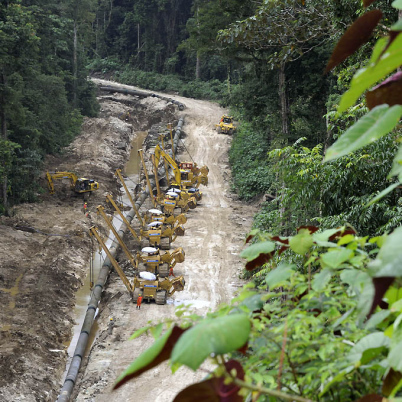
Construction was undertaken in a true greenfield environment, with no pre-existing road networks or supporting infrastructure across much of the route. The alignment crossed extremely rugged and varied terrain, including steep mountain slopes, swamps and wetlands, unstable soils, active fault zones and dense tropical rainforest.
The project area experiences year-round rainfall, with up to nine metres of rain annually, high humidity and temperatures regularly reaching 30–40°C. These conditions required resilient planning, flexible execution strategies and continuous mitigation measures to manage landslides, flooding and access disruptions while maintaining project momentum.
Engineering and logistics challenges
Logistics represented one of the project’s greatest challenges. Line pipe was transported from cargo ships onto barges and moved through the river network to the Kopi laydown yard, before being distributed along a 293 km pipeline route with no existing access. To enable construction, Spiecapag built roads and bridges, constructed floating bridges, and delivered more than 100 km of access tracks across volcanic soils and marshland.
Specialist construction methodologies were employed throughout the project, including:
- Horizontal Directional Drilling (HDD) to cross major rivers
- Cable crane systems and spider excavators for extremely steep slopes
- Rock trenching and marshland construction techniques
Community engagement and local content
Community engagement and local participation were fundamental to the project’s success. At peak, Spiecapag employed 2,400 PNG nationals, including 1,900 customary landholders along the pipeline route. An environmental and social compliance framework was implemented in collaboration with stakeholders across multiple tribal areas.
Local content development was a core commitment. Training schools were established to build long-term skills within the workforce, and local and national businesses were actively engaged to supply services and support the project – creating a lasting legacy beyond construction.
The PNG LNG onshore pipeline stands as a benchmark project for large‑scale pipeline delivery in remote and complex environments, having been completed five months ahead of schedule, with 28 million man‑hours worked and an exceptional Total Recordable Injury Frequency Rate (TRIFR) of 0.25.