
Unmatched Expertise in PNG Project Delivery
We have built over 600 km of operating pipelines in the Southern Highlands and Gulf provinces since the 1990’s. These include the Kutubu pipeline in the 1990’s and PNG LNG’s onshore export pipeline in the 2010’s. Since then, we have delivered the replacement of three mining sites Deep-Sea Tailings Pipelines (DSTP) on the remote island of Simberi and Lihir in New Ireland and undertaken the Lihir Ground Stabilisation Project in partnership with our sister company Menard Oceania.
Building pipelines and other infrastructure in remote parts of PNG requires a broad range of highly expert skills, and over the past 35 years we have planned, lived and learned the practical challenges of being a PNG construction contractor. Through the construction of both of the Highlands’ large-diameter long-distance pipelines, we have experienced the breadth of challenges that construction in these environments involves – and delivered both projects ahead of schedule.
This experience goes beyond the (significant) technical, logistical, climatic, environmental, security and safety challenges. It demands not only deep technical capability, but an intimate understanding of local conditions, communities and the realities of working in remote PNG.
Logistical Performance in the World’s Toughest Environments
Logistical Performance in the World’s Toughest Environments
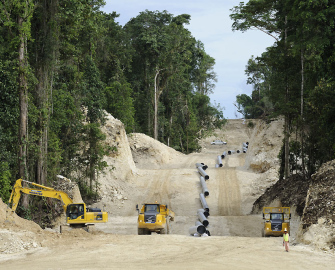
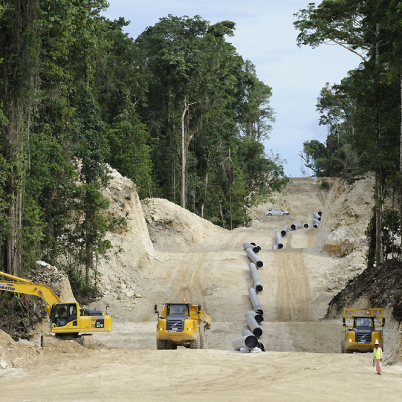
Few places on earth present the combination of steep mountains, dense rainforest, wetlands, remote islands, seismic activity and extreme rainfall found in Papua New Guinea.
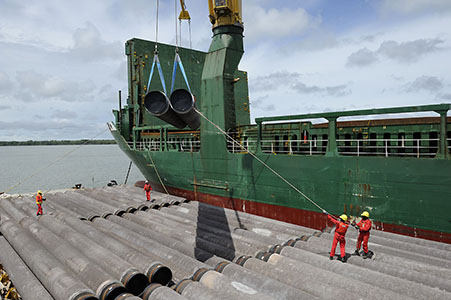
From transporting pipe via river barge networks to constructing kilometres of access track across marshlands or steep volcanic slopes, we design bespoke logistics solutions for each project. Our teams have delivered pipe strings over mountains, through swamps, across seismic regions and into remote islands, frequently building the infrastructure required to access the works themselves.
Commitment to Local Content and Community Partnerships
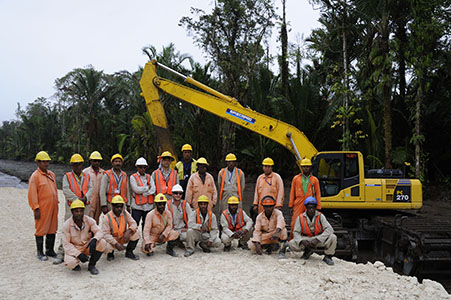
Spiecapag has a strong legacy of collaborating with customary landowners, local businesses and PNG communities. We invest in job‑readiness and construction skills training, local business participation, long-term capacity building programs as well as social and environmental compliance across tribal boundaries.
These initiatives ensure our projects leave enduring benefits, new skills and future opportunities for local people.
Industry-Leading Safety & International Best Practice
Industry-Leading Safety & International Best Practice
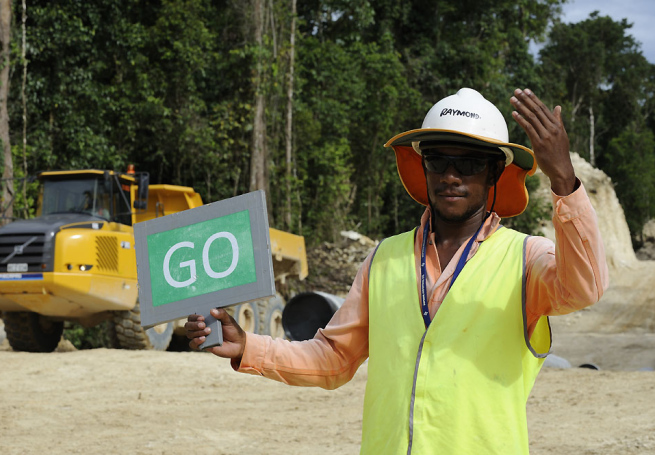
Operating in PNG’s rugged environment requires disciplined safety, risk management and innovation. Spiecapag maintains an enviable safety record - supported by global ISO accreditations in quality, environmental management, and occupational health and safety. Our teams continuously improve controls, empower workers to manage risk, and adopt global best practice reinforced by the strength of the VINCI Group. Our most recent PNG project, the Lihir Ground Stabilisation Project was completed with no time lost to injury with approximately 2.3 million hours worked, a testament to the team’s unwavering commitment to safety & excellence!

Financial Strength & Global Backing
As part of VINCI, a global engineering and construction group with AUD$127 billion in annual revenue, Spiecapag offers the financial stability, buying power, and technical support of an international leader. This enables us to mobilise rapidly, bring specialist expertise to PNG projects, and ensure reliability on complex, large-scale developments.
PNG LNG: Delivering One of PNG’s Most Significant Infrastructure Assets
PNG LNG: Delivering One of PNG’s Most Significant Infrastructure Assets
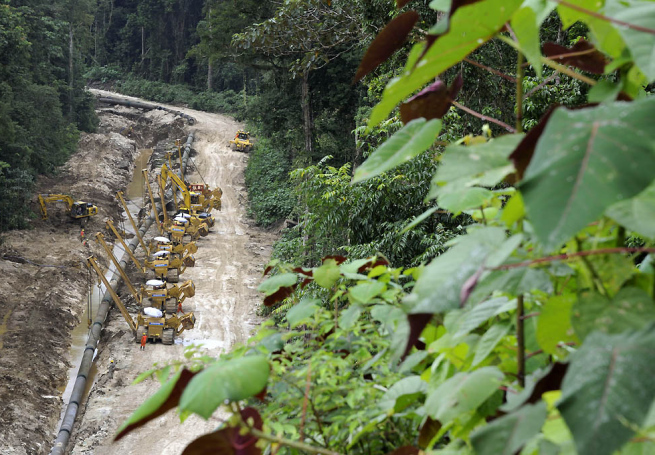
Led by ExxonMobil, the PNG LNG Project is one of the region's largest resource developments, with investment exceeding USD 19 billion. In 2009, Spiecapag was awarded the full Engineering, Procurement & Construction (EPC) contract for the onshore pipeline system and successfully completed the works in 2014. The project remains a benchmark for large‑scale pipeline delivery in remote and complex environments - having finished five months ahead of schedule with 28 million man‑hours worked and an exceptional Total Recordable Injury Frequency Rate (TRIFR) of 0.25.
Our PNG Projects
Lihir Ground Stabilisation Project (MOSA JV)
More information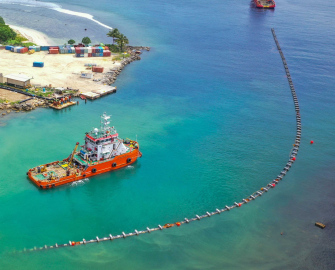
Simberi Deep-Sea Tailing Pipeline
More information
TK050 & TK2050 - Lihir Island Tailings Lines Projects
More information
Tangguh LNG Expansion Project
More information